
Proper rigging maintenance is essential for your sailboat’s safety and performance. Regular inspections help identify potential issues before they lead to failure, damage, or injury. The busy spring launch season presents a good opportunity to check areas that are otherwise difficult to access, especially if you typically unstep the mast for winter storage.
While this guide outlines key checks you can perform, it does not replace professional inspections. Your insurer may require periodic rigging assessments by a qualified rigger. Seek expert advice if unsure about your skills.

Tools for Inspection:
- Binoculars (to inspect aloft with a stepped mast)
- Flashlight
- Scotch-Brite pad (for cleaning and removing surface corrosion)
- Magnifying glass or camera (to zoom in on details)
- Mast and Spars
Inspect the mast and spars for cracks, dents, or deep scratches. Pay close attention to hardware attachment points, ensuring halyard exits are smooth and free of sharp edges. Check fasteners for looseness or elongation at attachment points. Examine spreaders for stress cracks and ensure their tips are free of burrs that could damage standing rigging. Remove spreader boots if necessary for a thorough check.
For rod rigging, look for visible cracks, deformation, or bending at rod ends.
Inspect masthead components and sheaves for damage that may cause halyard chafing.
If the mast is aluminum, watch for white powder (on unpainted masts) or bubbled paint (on painted masts), especially around hardware attachments where stainless steel fasteners meet aluminum. Check for pitting and material loss.
When the mast is stepped, inspect what’s visible from deck level using binoculars. If qualified, you can use a bosun’s chair for closer inspection. Also, view the mast from a distance to ensure it’s straight and in column—bends may indicate rigging adjustments are needed.
- Mast Step
Mast steps are susceptible to corrosion, especially true of keel stepped masts. Watch for white powder on the surface of the mast step and the mast base. After cleaning, check for pitting and material loss. For deck stepped masts, watch for sunken areas on deck adjacent to the mast step. If this area is developing cracks and appears lower than the surrounding deck, this is a clear indication that there are structural problems developing below decks. Like wise with a keel stepped mast, look for cracks in the support structure of the mast step in the bilge. If you have noticed that the rig does not maintain the correct tension after adjustment, there may be problems developing.
- Standing Rigging
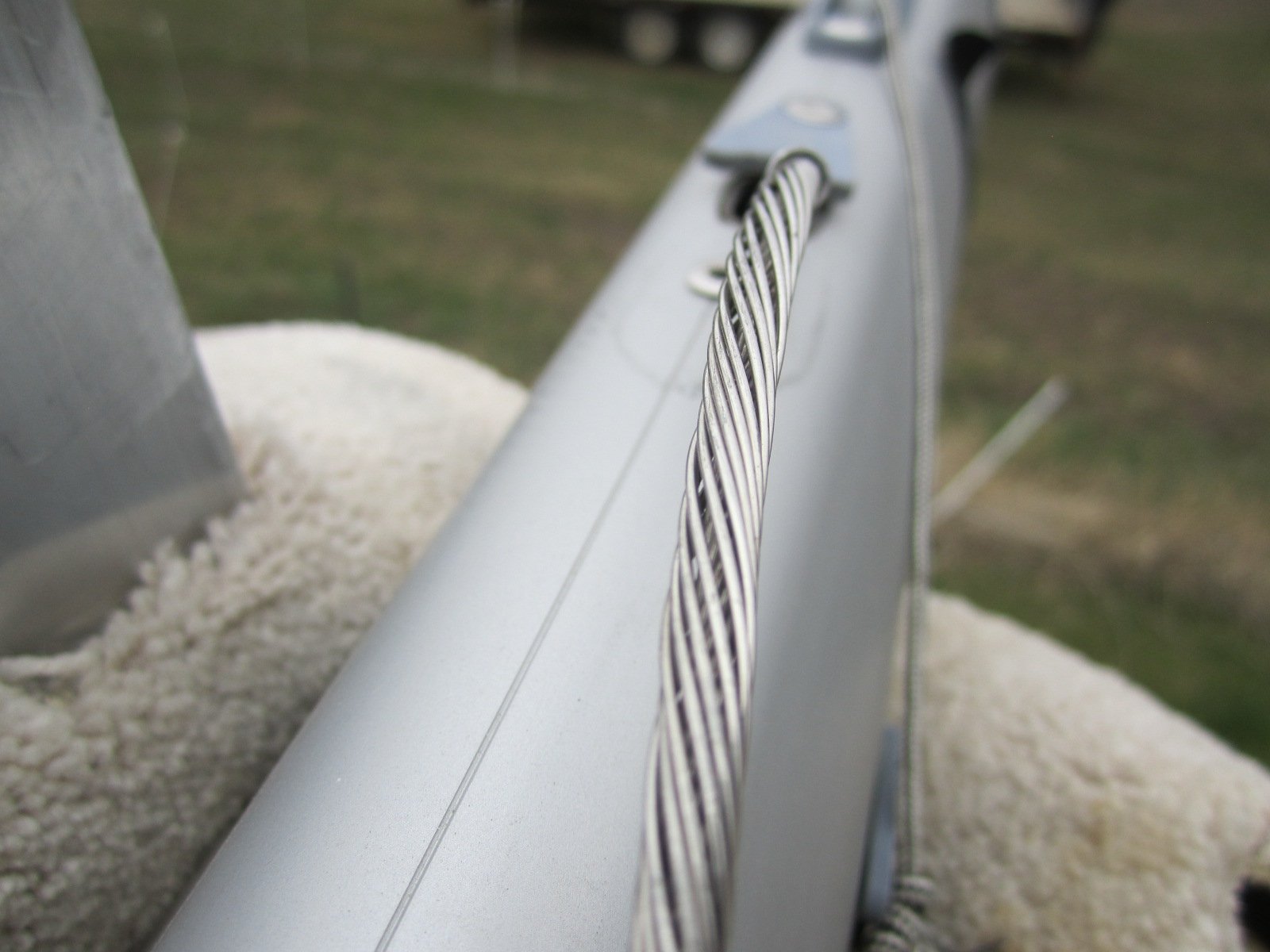
Standing rigging holds the mast in place. Inspect for frayed wires, broken strands, or kinks. Check swage connections at turnbuckles, cleaning corrosion as needed. Use a magnifying glass or close-up photos to identify broken strands, especially near turnbuckles. If your boat has a furling system, inspect any visible sections of the forestay for fraying, particularly near the masthead.
Chainplates, often overlooked, should be periodically removed and inspected. If your boat is older and their inspection history is unknown, prioritize this in your maintenance schedule. Check visible portions for corrosion, pitting, cracks, and deformed holes. Below decks, look for water intrusion, which can weaken the surrounding structure.

- Running Rigging
Running rigging controls your sails. Check for chafing, cuts, or wear. Inspect blocks for cracked sheaves or housings. Ensure clutches and cleats operate smoothly, as failure in heavy weather could be dangerous. Pay special attention to furling systems—maintain the furling line and associated blocks to prevent failure in critical conditions.
- Fittings and Hardware
Inspect all rigging hardware for corrosion or damage. Tighten or replace loose or missing bolts and nuts. Check tracks and travelers for sharp edges that could damage lines or pose a safety hazard. Examine halyard shackles, snap shackles, and clevis fasteners, replacing any showing wear.
- Lubrication
Lubricate moving parts to prevent corrosion and wear. Dry Teflon lubricants are recommended as they repel dirt and won’t stain sails or decks.
- Winches
Winches require regular maintenance to stay in working order. Service is typically straightforward and can be done without special tools. Refer to the manual for your specific brand and type of winch for more information on frequency and instructions on service.
- Professional Inspection
If you’re unsure about your rigging’s condition, consult a professional rigger. They can perform thorough inspections and repairs, ensuring structural integrity. If the history of your standing rigging or chainplates is unknown, schedule an inspection at your earliest opportunity.
Final Thoughts
Investing a few hours each season in rigging inspections helps prevent failures and maximizes your time on the water. As the saying goes, an ounce of prevention is worth a pound of cure.
By David W. Donnelly